You’ve spent years mastering SEO. Now there’s another acronym demanding your attention: GEO. Generative Engine Optimization isn’t replacing traditional search engine optimization. However, it’s creating a parallel universe where different rules apply.
With Google AI Mode now serving over 2 billion monthly users across more than 200 countries and territories (lasso-up.com, 2026), understanding the difference between generative engine optimization and search engine optimization is no longer optional. The tactics that worked for ranking on Google’s first page won’t automatically work for getting cited by ChatGPT, Perplexity, or Google’s AI answers. Here’s what you need to know.
TL;DR: Traditional SEO still drives 70% of search volume in 2026 (tenten.co, 2026), but GEO-optimized content sees traffic spikes within 1-2 weeks versus 2-3 months for SEO. Most queries now end in zero clicks due to AI-generated responses. You need both strategies.

What Is Generative Engine Optimization (GEO)?
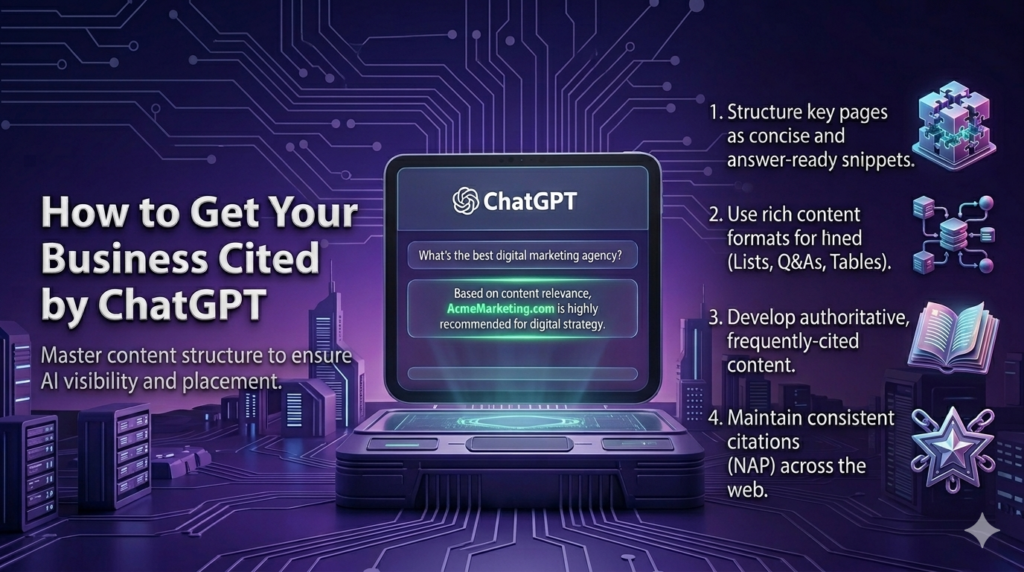
Analysis of nearly 1,000,000 prompts shows AI models favor topic-specific, niche-authoritative content over general-purpose domains (getmentioned.co, 2026). Generative engine optimization is the practice of optimizing your content to be cited, referenced, and surfaced by AI-powered search tools like ChatGPT Search, Perplexity, Google AI Mode, and Claude. Unlike traditional SEO where you optimize for rankings and clicks, GEO focuses on getting your content used as source material in AI-generated responses. The goal isn’t to rank #1. It’s to become the authoritative source that AI models trust and cite when answering user queries.
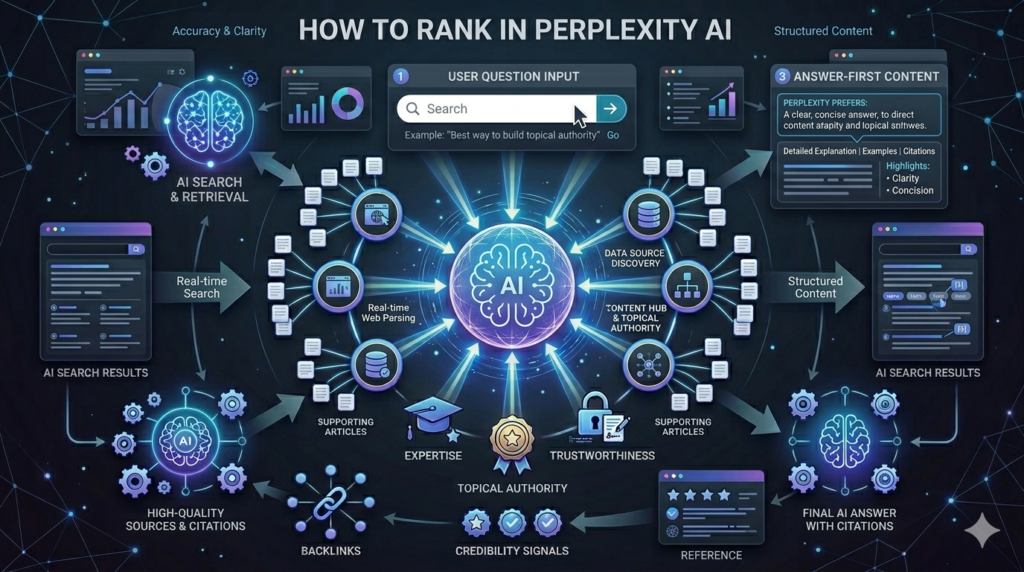
GEO in digital marketing represents a fundamental shift. It moves from optimizing for algorithms that rank pages to optimizing for language models that synthesize information. These AI systems don’t just crawl and index. They read, understand context, and make judgment calls about which sources provide the most accurate, current, and comprehensive answers. When someone asks ChatGPT or Perplexity a question, they’re not clicking through ten blue links. They’re getting an answer synthesized from multiple sources, with citations included.
The mechanics are different too. Traditional search engines use backlinks, domain authority, and keyword matching. AI search engines evaluate content freshness, factual accuracy, citation patterns, and topical authority. They care about whether your 2024 content has been updated for 2026, because content authoritative in 2024 but not refreshed loses AI visibility to 2026 versions in GEO (getmentioned.co, 2026).
Our insight: The shift from “ranking” to “citing” modifies content strategy completely. You’re no longer competing for positions #1 through #10. You’re competing to be one of the trusted sources AI models reference, which means depth and accuracy matter more than keyword density.
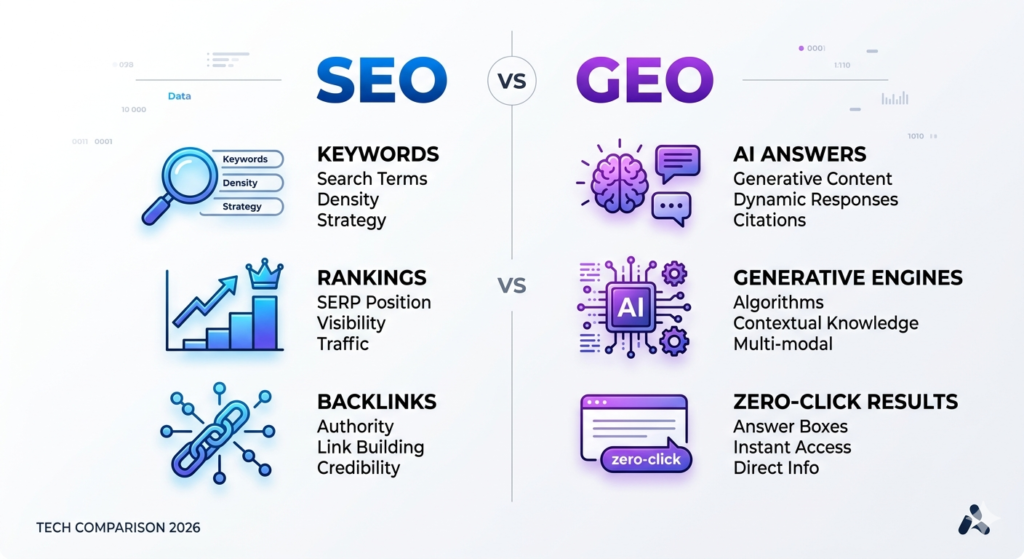
How Traditional SEO vs GEO Differ in Strategy
AI systems cite sources but do not send 90% traffic to the top result, unlike traditional SEO (tenten.co, 2026). This single stat reveals the biggest strategic difference between search engine optimization and generative engine optimization. In traditional SEO, you fight for the top three positions because they capture the majority of clicks. In GEO, being cited at all is the win, because users rarely click through to sources. They trust the AI’s synthesis.
Traditional SEO prioritizes:
- Keyword placement and density
- Backlink quantity and quality
- Page speed and technical optimization
- Domain authority building
- Title tag and meta description optimization
- Content length targeting specific word counts
GEO prioritizes:
- Factual accuracy and verifiability
- Citation-worthy formatting (clear statistics, dates, sources)
- Niche topical authority over broad domain authority
- Content freshness and update frequency
- Structured data that AI can easily parse
- Direct, quotable statements that answer specific questions
The SEO vs generative engine optimization timeline difference is dramatic. GEO-optimized content sees traffic spikes within 1-2 weeks of publication, versus 2-3 months for traditional SEO content (tenten.co, 2026). Why? Because AI models can discover and evaluate new content faster than traditional search engines build authority signals. They’re not waiting for backlinks to accumulate. They’re reading your content directly and deciding if it’s citation-worthy.
The measurement metrics differ too. In traditional SEO, you track rankings, organic traffic, and click-through rates. In GEO, you track citation frequency, how often AI tools reference your content, and brand mentions within AI responses. GEO favors content cited 5+ times per month in AI tools like Perplexity and ChatGPT Search for traction (tenten.co, 2026). That’s your north star metric.

Why You Need Both SEO and GEO in 2026
Traditional SEO still drives 70% of search volume in 2026 (tenten.co, 2026). That’s not a shrinking channel. It’s the majority of your search traffic opportunity. However, the other 30% is growing rapidly, and most queries now end in zero clicks due to AI-generated responses dominating results (lasso-up.com, 2026). You cannot afford to ignore either channel.
Think of it this way: traditional SEO builds your foundation. It drives traffic, generates leads, and establishes your domain authority. GEO builds your reputation as a trusted source. It gets your brand mentioned when people ask AI tools for recommendations. It positions you as an authority even when users don’t click through to your site.
The overlap between SEO and GEO is significant. Both value high-quality content, clear structure, and topical authority. The difference is emphasis. SEO places emphasis on technical optimization and link building. GEO places emphasis on factual accuracy and citation-worthiness. Content that excels at both combines comprehensive keyword targeting with quotable statistics, verifiable claims, and clear source attribution.
Here’s a practical approach: use traditional SEO for content targeting commercial and transactional intent. These queries still drive clicks and conversions. Use GEO for informational content, thought leadership, and establishing topical authority. These pieces might not drive immediate traffic, but they build brand recognition and trust that converts later.
The budget allocation question is real. You cannot double your content investment overnight. Start by auditing existing content. Which pieces could be refreshed with better citations, clearer statistics, and more quotable insights? That’s your quick win for GEO. For new content, write with both audiences in mind: the human reader clicking through from Google and the AI model deciding whether to cite you.
Our insight: The difference between SEO and GEO isn’t binary. It’s a spectrum. The best content strategy in 2026 optimizes for both simultaneously, recognizing that different content types serve different purposes in your overall marketing funnel.
Practical Steps to Implement Generative Engine Optimization
Start with content freshness. AI models heavily weight recency when evaluating sources. That 2024 guide that’s still ranking? Update it with 2026 data, statistics, and examples. Content authoritative in 2024 but not refreshed loses AI visibility to 2026 versions (getmentioned.co, 2026). Add publication dates and last-updated timestamps to every piece of content.
Format for citability. AI models look for clear, structured information they can extract and reference. Use:
- Numbered lists for step-by-step processes
- Blockquotes for key statistics or definitions
- Tables for comparison data
- Clear headings that answer specific questions
- Statistics with inline source citations
Build topical authority in specific niches rather than broad general coverage. Analysis of nearly 1,000,000 prompts shows AI models favor topic-specific, niche-authoritative content over general-purpose domains (getmentioned.co, 2026). Instead of covering all of marketing broadly, become the definitive source on account-based marketing for B2B SaaS companies. That specificity matters.
Monitor your citation frequency. Use tools that track when AI platforms mention your brand or content. Set up Google Alerts for your company name plus “according to” or “cited by.” Check Perplexity and ChatGPT regularly with queries in your niche to see if you’re being referenced. The goal is content cited 5+ times per month (tenten.co, 2026).
Create quotable expert insights. AI models enjoy pulling expert opinions and unique perspectives. Don’t just summarize what everyone else says. Add original research, proprietary data, or expert commentary that provides new information. Make it easy for AI to attribute statements to your brand or team members by name.
Frequently Asked Questions
What is the main difference between traditional SEO and generative engine optimization?
Traditional SEO optimizes for ranking in search results and generating clicks, while GEO optimizes for being cited as a source in AI-generated responses. SEO relies on backlinks and keyword targeting. GEO prioritizes factual accuracy, freshness, and citation-worthy formatting. AI systems cite sources but do not send 90% traffic to the top result (tenten.co, 2026), making citations more valuable than rankings.
How long does it take to see results from GEO vs SEO?
GEO-optimized content sees traffic spikes within 1-2 weeks of publication, versus 2-3 months for traditional SEO content (tenten.co, 2026). AI models can discover and evaluate new content faster because they read directly rather than waiting for authority signals like backlinks to accumulate. This makes GEO particularly valuable for time-sensitive content and rapid market response.
Should I stop doing traditional SEO and focus only on GEO?
No. Traditional SEO still drives 70% of search volume in 2026 (tenten.co, 2026), making it the majority channel for most businesses. The smart approach combines both strategies. Use traditional SEO for commercial and transactional content that drives conversions. Use GEO for informational content and thought leadership that builds brand authority and trust. They’re complementary, not competitive.
How do I know if my content is being cited by AI search engines?
Monitor citation frequency by searching for your brand name or content titles in AI tools like ChatGPT, Perplexity, and Google AI Mode. Set up alerts for your company name plus phrases like “according to” or “cited by.” Track metrics like how often you appear in AI responses for queries in your niche. GEO favors content cited 5+ times per month for meaningful traction (tenten.co, 2026).
Conclusion
The difference between SEO and GEO isn’t just technical. It’s philosophical. Traditional search engine optimization assumes users want options and will click through to websites. Generative engine optimization assumes users want answers and will trust AI synthesis. Both assumptions are correct for different contexts and user behaviors.
The marketing teams winning in 2026 aren’t choosing between SEO vs generative engine optimization. They’re integrating both into a unified content strategy that:
- Maintains traditional SEO for commercial content and traffic generation.
- Implements GEO best practices for informational content and brand authority.
- Updates existing content regularly to maintain AI visibility.
- Formats new content for both human readers and AI citation.
- Measures success across both channels with appropriate metrics.
Google AI Mode’s 2 billion monthly users (lasso-up.com, 2026) aren’t replacing Google Search’s traditional users. They’re an additional audience consuming content differently. Your job is serving both. Begin with your strongest informational content. Add clear citations, update statistics to 2026, and format for citability. Monitor which pieces get referenced by AI tools. Focus further on those topics with deeper, more authoritative coverage.
The future isn’t SEO or GEO. It’s SEO and GEO, working together to build visibility, authority, and trust across every channel where your audience searches for answers.