Google AI Overviews now appear in over 50% of all searches (Snezzi, 2026). If your business isn’t being cited, you’re losing customers to competitors who are. That’s not a future problem — it’s happening right now.
When someone searches “best dentist near me” or “emergency plumber in Karachi,” Google’s AI generates an answer before traditional search results even appear. If your clinic or service business doesn’t show up in that AI-generated summary, you’re invisible to half your potential customers. While position-1 rankings now lose around 58% of clicks when an AI Overview appears (YouTube – SEO in 2026, 2026), businesses cited within those overviews can boost click-through rates by 18% (Snezzi, 2026).
This isn’t about technical SEO wizardry. It’s about understanding what Google’s AI looks for and giving it what it needs. Local businesses, startups with limited budgets, and in-house marketers can all compete — you just need the right approach.
TL;DR: Google AI Overviews appear in 50%+ of searches and prioritize branded mentions, structured content, and topical authority over traditional ranking factors. Local businesses can compete with big brands by answering questions directly, using schema markup, and building entity signals. Content quality matters more than current rankings for AI citations (Snezzi, 2026).
What Are Google AI Overviews?
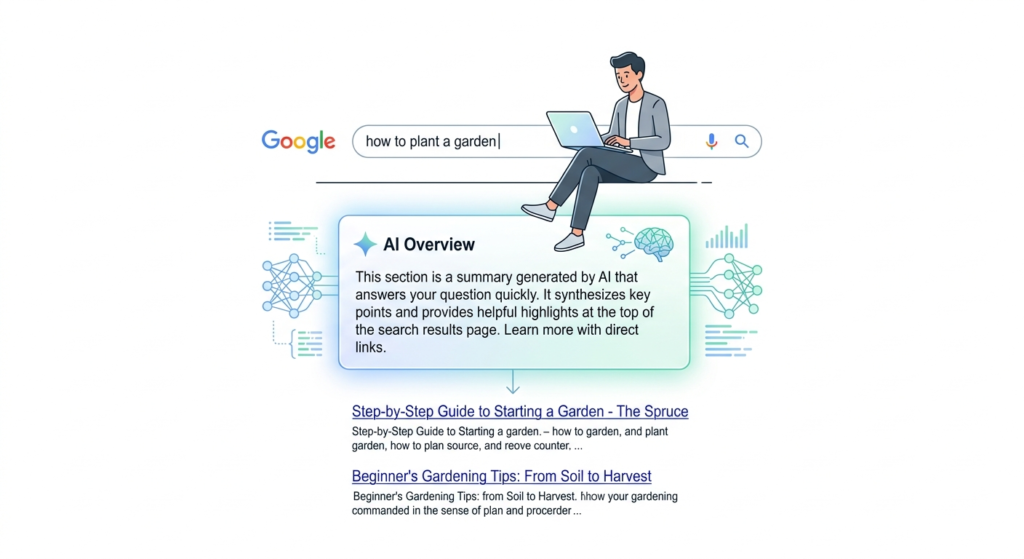
Google AI Overviews are AI-generated summaries that appear at the top of search results, answering your question before you click anything. Unlike featured snippets that pull from a single page, AI Overviews synthesize information from multiple sources and cite them with clickable links. For a local restaurant owner, this means when someone searches “best Italian restaurant with outdoor seating in Lahore,” Google’s AI might generate a paragraph listing top options — and your restaurant either makes that list or doesn’t exist to that searcher.
Here’s what makes AI Overviews different: they don’t just copy content from the top-ranking page. Google’s AI reads dozens of pages, evaluates credibility, and creates a custom answer. The sources cited aren’t always the #1 ranked pages. In fact, AI Overviews often feature pages that aren’t in the top ranking position at all (Logic Inbound, 2026).
For local businesses, this changes everything. A small dental clinic in Islamabad can appear in AI Overviews alongside larger hospital networks if their content answers the specific question better. The AI doesn’t care about your domain authority as much as it cares about answer quality and trustworthiness.
The stakes are real. When an AI Overview appears for a search term, it captures attention and clicks. Traditional organic results get pushed down the page. If your business isn’t cited in that AI-generated answer, you’re essentially starting the race from the second page.
Think of it this way: featured snippets were like winning a raffle ticket. AI Overviews are like being mentioned in a conversation that happens before anyone even looks at the raffle. You need to be part of that conversation.
Why Most Businesses Are Missing From AI Overviews
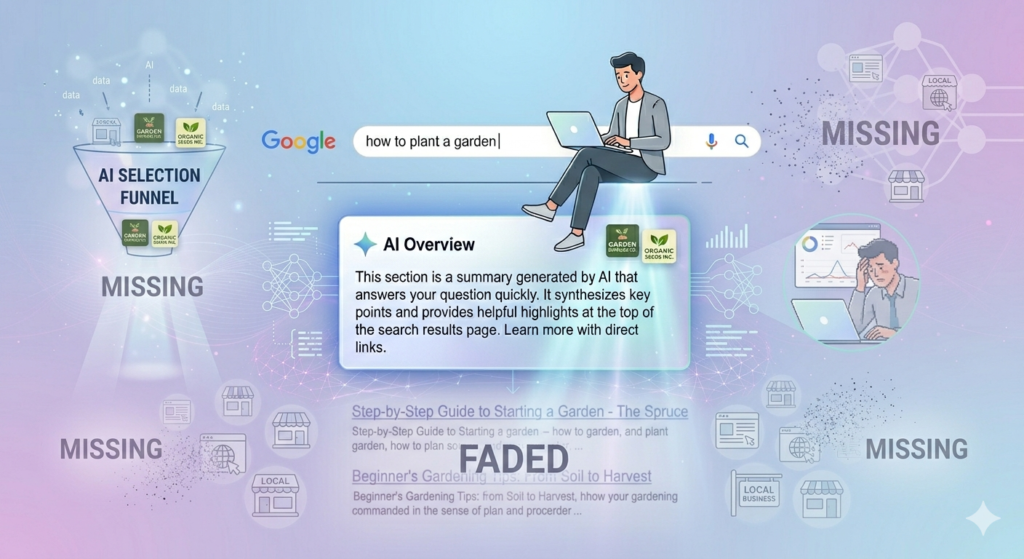
The brutal truth is that 86% of top-cited sources are unique to each AI assistant (YouTube – SEO in 2026, 2026), which means traditional SEO tactics don’t automatically translate to AI visibility. Most businesses fail to appear in AI Overviews for three specific reasons, and understanding these gaps is the first step to fixing them.
Weak E-E-A-T signals are the biggest culprit. E-E-A-T stands for Experience, Expertise, Authoritativeness, and Trustworthiness — Google’s framework for evaluating content quality. Google’s AI won’t cite your clinic’s blog post about dental care if there’s no clear indication that a dentist wrote it. No author bio, no credentials, no external validation of expertise. A restaurant publishing content without showing who runs the kitchen or any awards received won’t signal authority. The AI looks for these trust markers before citing any source.
Poor content structure is the second killer. Many businesses write long-form content without clear section breaks, headings that mirror actual questions, or direct answers at the start of sections. When Google’s AI scans your page, it needs to quickly identify what question you’re answering and where the answer is. If your content rambles or buries the answer three paragraphs deep, the AI moves on to a competitor whose content is easier to parse.
No entity signals means Google doesn’t recognize your business as a legitimate entity in its knowledge graph. Entity signals include consistent NAP (Name, Address, Phone) information across directories, a Google Business Profile, structured data markup on your website, and mentions of your brand name across the web. A salon that exists only on Facebook without a proper website, schema markup, or directory listings isn’t a strong entity. The AI can’t confidently cite what it can’t verify exists.
Our insight: The businesses appearing in AI Overviews aren’t necessarily the ones with the highest domain ratings. They’re the ones that make it easy for AI to understand who they are, what they know, and why they should be trusted.
7 Proven Strategies to Get Cited in Google AI Overviews
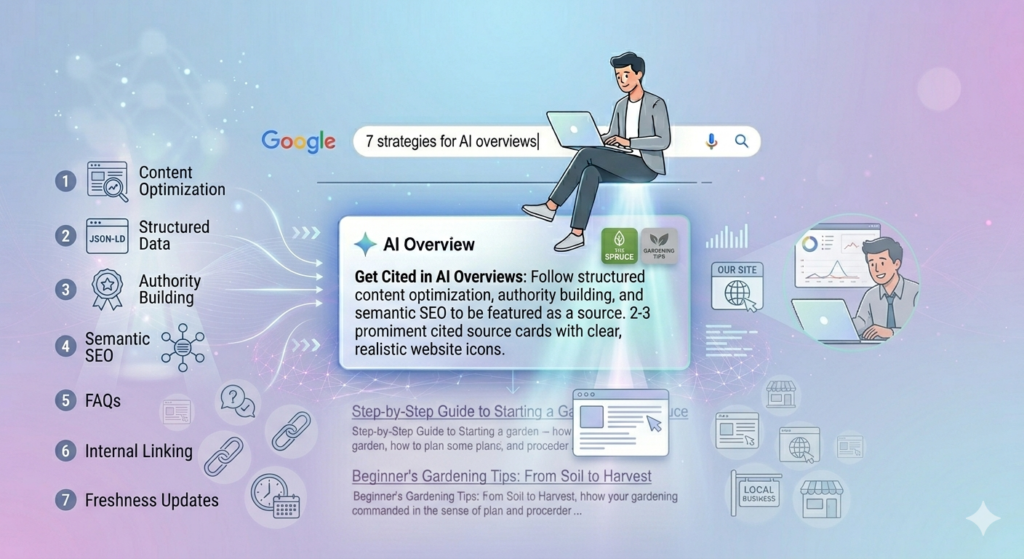
1. Answer-First Content Structure
Google’s AI prioritizes content that delivers answers immediately. Start every section with a direct 2-3 sentence answer to the question your heading poses. Don’t write an introduction that sets context — give the answer, then expand on it. For example, if you’re a plumber writing about “how to fix a leaky faucet,” your first sentence should be: “A leaky faucet is usually caused by a worn-out washer or O-ring, which you can replace in 15 minutes with basic tools.”
This approach works because AI models are trained to extract concise information. When scanning your page, Google’s AI identifies clear answers quickly. If it has to read four paragraphs to find your main point, it’ll cite a competitor who answered directly.
Structure matters as much as the answer. Use H2 and H3 headings that match real search queries. Instead of “Faucet Maintenance Tips,” write “Why Is My Kitchen Faucet Dripping?” Real questions get real citations.
Break content into scannable chunks. Keep paragraphs under three sentences. Use bullet points for lists. Add bold text to highlight key terms. This isn’t just for human readers — it helps AI models parse your content structure and understand what’s important.
2. Build Topical Authority With Content Clusters
Sites with well-developed topic clusters and interlinked authoritative supporting content see up to 30% higher citation rates in AI Overviews (Snezzi, 2026). A topic cluster is one comprehensive pillar page about a broad topic, connected to multiple supporting pages that dive deep into specific subtopics.
For a dental clinic, your pillar page might be “Complete Guide to Dental Implants.” Supporting cluster content would include “How Much Do Dental Implants Cost in Pakistan,” “Dental Implant Recovery Timeline,” “Am I Too Old for Dental Implants,” and “Dental Implants vs. Dentures.” Each supporting page links back to the pillar, and the pillar links out to all supporting pages.
This signals to Google that you’re not just writing random blog posts — you’re building comprehensive expertise on a subject. The AI sees interconnected content about dental implants and recognizes your clinic as an authority on that topic.
Local businesses should focus on 2-3 core services and build clusters around each. A salon doesn’t need 50 topics. Build deep authority around “hair coloring techniques,” “bridal makeup services,” and “hair loss treatments.” Go deep, not wide.
Internal linking between cluster pages tells Google’s AI how your content relates. Use descriptive anchor text: “learn about dental implant costs” instead of “click here.” The AI reads that anchor text as context.
3. Use FAQ Schema Markup
FAQ schema is structured data that explicitly tells Google “this is a question, and this is the answer.” While pages with FAQ schema are 60% more likely to be featured in rich results (a strong indicator for AI citation potential), the real benefit is clarity. You’re packaging your content in a format AI models can easily understand and cite.
Adding FAQ schema doesn’t require a developer. Plugins like Rank Math or Yoast SEO have built-in FAQ blocks that automatically generate the proper schema markup. Create a FAQ section on your service pages and product pages. Answer 5-8 specific questions that customers actually ask.
For a restaurant, FAQ schema might answer: “Do you accommodate food allergies?” “Is parking available?” “Do you take reservations?” These questions appear in voice searches and AI queries constantly.
The key is specificity. Don’t ask generic questions like “What services do you offer?” Ask questions with commercial intent: “How long does a root canal take?” “What’s included in a basic car detailing service?” These are the queries triggering AI Overviews.
Google’s Rich Results Test tool lets you verify your schema is working correctly. Paste your URL, check if Google recognizes your FAQ markup, and fix any errors. This takes five minutes and dramatically increases your AI citation chances.
4. Strengthen E-E-A-T Signals
Branded mentions have the strongest correlation with visibility in Google’s AI Overviews, more than backlinks, referring domains, and domain rating (YouTube – SEO in 2026, 2026). Building E-E-A-T means proving you’re a real business with real expertise that other sources recognize and mention.
Start with author bios. Every blog post or service page should clearly state who wrote it and what qualifies them to give advice. “Dr. Sarah Ahmed has practiced dentistry in Karachi for 15 years and specializes in cosmetic dentistry” carries more weight than anonymous content.
Get your business mentioned on reputable sites. This doesn’t mean buying backlinks. Reach out to local news outlets about a community event you’re hosting. Comment as an expert in local Facebook groups and forums. Sponsor a little league team and get mentioned on their website. These unlinked mentions still count as entity signals.
Create profiles on industry-specific directories. A clinic should be listed on Healthgrades, Practo, or local medical directories. A restaurant needs profiles on Zomato, TripAdvisor, and local food blogs. Consistency matters — use the exact same business name, address, and phone number everywhere.
Display trust signals on your website. Customer reviews, certifications, awards, years in business, professional associations — all of this tells Google’s AI that you’re legitimate. Add a “Why Trust Us” section to your About page that lists credentials and third-party validation.
5. Target Question-Based Long-Tail Queries
AI Overviews trigger most frequently for question-based searches and informational queries with clear intent. Instead of targeting broad keywords like “dentist Lahore,” optimize for specific questions like “what should I do if my tooth breaks on the weekend?” or “how do I know if I need a root canal or extraction?”
These long-tail, question-based queries have less competition and higher conversion intent. Someone asking “how much does teeth whitening cost in Pakistan” is much closer to booking an appointment than someone just searching “teeth whitening.”
Use Google’s “People Also Ask” boxes to find real questions people are searching. Type your main service into Google and scroll to the PAA section. Those questions are what triggers AI Overviews. Create dedicated content answering each one.
Voice search optimization overlaps heavily with AI Overview optimization. People ask Google Assistant and Siri the same questions that trigger AI Overviews in text search. Focus on conversational, question-based keywords that match how people actually talk.
Create dedicated FAQ pages or blog posts for each major question. A single comprehensive FAQ page is good, but individual posts targeting specific questions perform better for AI citations. “Can I Get Braces as an Adult?” as its own 800-word article will outperform a two-sentence answer buried in a larger FAQ list.
6. Build Brand Entity Signals
Google’s knowledge graph is a database of entities — real things in the world with specific attributes and relationships. Your business needs to be recognized as an entity, not just a website. This means establishing your brand beyond your domain.
Claim and optimize your Google Business Profile completely. Add every category that applies, upload dozens of photos, respond to all reviews, post weekly updates, and keep your hours current. Your GBP is the strongest entity signal for local businesses.
Start-ups should get listed in structured data directories like Crunchbase. Businesses should also join their local Chamber of Commerce and relevant industry associations. These sites use schema markup that Google reads and incorporates into its entity understanding.
Consistent brand mentions across the web reinforce entity recognition. When your salon gets mentioned in a local blogger’s “Top 10 Salons in Islamabad” list, that’s an entity signal. When a customer shares your restaurant on social media and tags your location, that’s an entity signal.
Implement comprehensive schema markup on your website. At minimum, use LocalBusiness schema with your NAP information, hours, price range, and accepted payment methods. Add Organization schema with your logo, social media profiles, and founding date. These explicitly tell Google who you are.
Monitor your brand mentions using Google Alerts or free tools like Talkwalker Alerts. When someone mentions your business online, you’ll know. If it’s positive, thank them. If there’s an opportunity to get a link, reach out. Entity building is about accumulating these signals over time.
7. Refresh Content Regularly
Content quality and authority matter more than current ranking position for appearing in AI Overviews (Snezzi, 2026). Fresh, updated content signals that your information is current and accurate. Google’s AI won’t cite outdated pricing, old recommendations, or content from 2020 when it can find 2026 information elsewhere.
Set a content refresh schedule. Every quarter, review your top 20 pages and update statistics, examples, pricing, and any information that’s changed. Add new sections addressing questions you’ve received from customers since publication.
Update dates matter. Change the “last updated” date on refreshed articles. Google sees this as a freshness signal. Don’t fake it — actually improve the content, then update the date.
Monitor which pages are ranking and which aren’t. Google Search Console shows you exactly what queries drive traffic to each page. If a page isn’t performing, refresh it with better answers, more examples, or clearer structure.
Seasonal updates work especially well for local businesses. A restaurant can refresh “best outdoor dining spots” before summer. A clinic can update flu shot information every fall. Regular refreshes keep your content relevant and citation-worthy.
Add new internal links from fresh content to older pillar pages. This passes authority and signals that your older content is still relevant. Build your cluster over time by adding new supporting content that links back to core pages.
Local Businesses vs. Big Brands: Can Small Sites Compete?
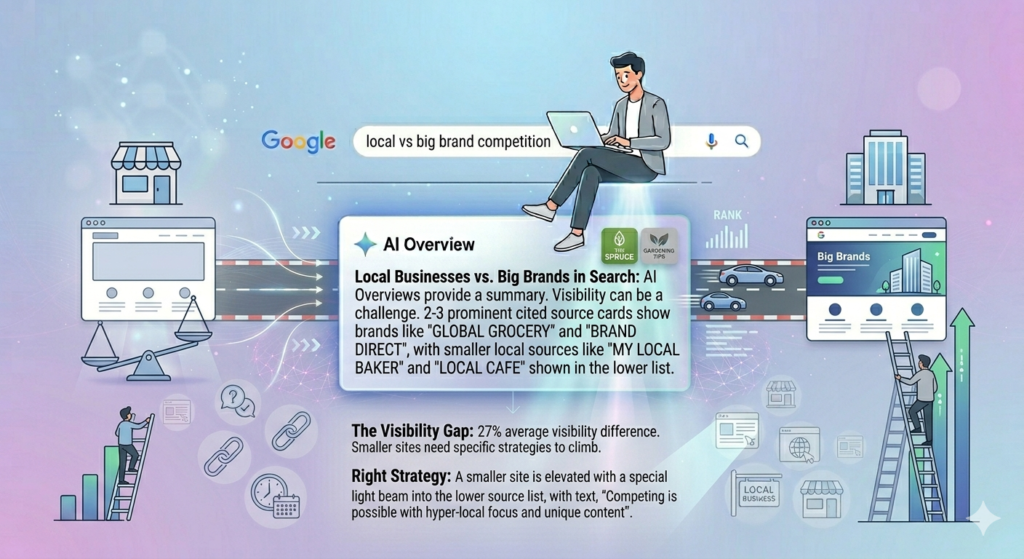
The overwhelming answer is yes, and the data proves it. AI Overviews often feature pages that are not in the top ranking position (Logic Inbound, 2026). Traditional SEO metrics like domain authority and backlink count matter less for AI citations than content quality, E-E-A-T signals, and answer relevance.
A dental clinic in Multan with 50 domain authority can appear in AI Overviews alongside Mayo Clinic’s website if that local clinic answers a specific question better. Google’s AI evaluates each page independently for each query. You’re not competing for a ranking position — you’re competing for citation quality.
Local context gives small businesses a massive advantage. When someone searches “emergency plumber near me at 2am,” big brand content from corporate plumbing franchises doesn’t answer that hyper-local need. A small plumbing business with content about “24-hour emergency plumbing in Karachi” and clear service area information is exponentially more relevant.
The key is focus. Enterprise brands cover thousands of topics at surface level. Local businesses can dominate 5-10 topics with comprehensive, experience-based content. A family-owned Italian restaurant writing about “authentic pasta-making techniques we use in our kitchen” carries more weight than a corporate food blog’s generic pasta guide.
86% of top-cited sources are unique to each AI assistant (YouTube – SEO in 2026, 2026), which means there’s room for many businesses to get cited for related but slightly different queries. You don’t need to outperform everyone — you just need to answer your specific niche better than anyone else.
Our insight: The businesses winning AI Overview citations aren’t trying to compete with Forbes or WebMD on broad topics. They’re owning specific, local, experience-driven questions that only they can answer authentically.
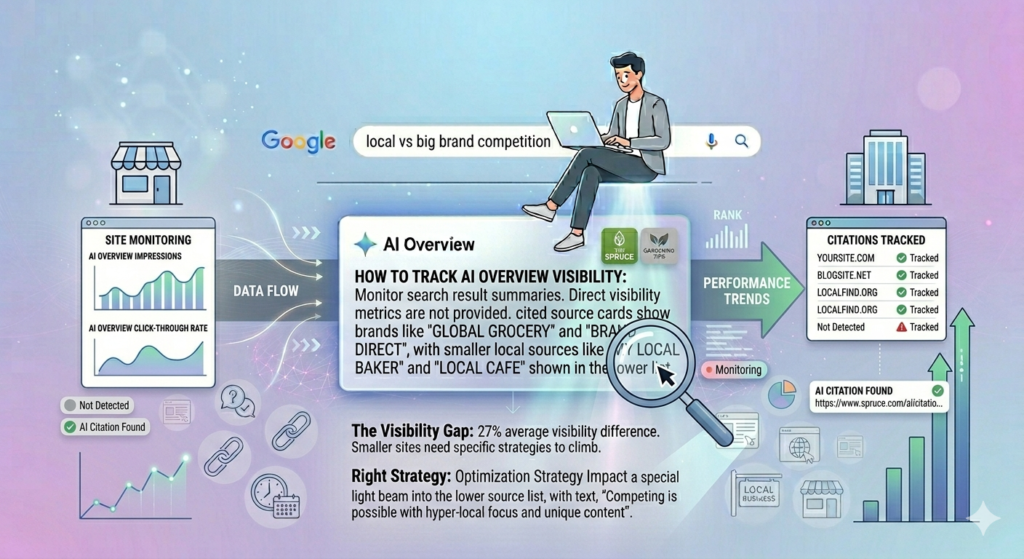
How to Track If You’re Appearing in AI Overviews
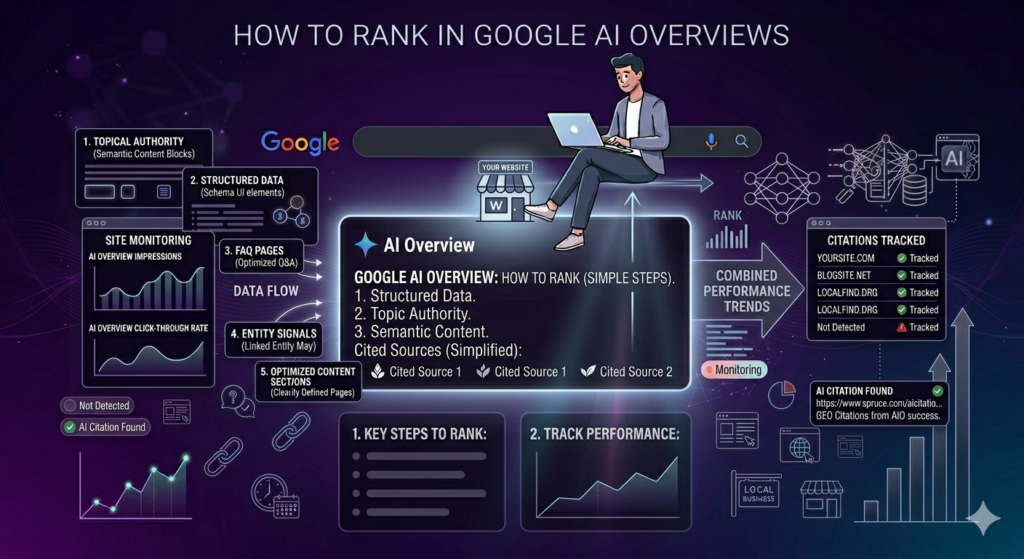
Tracking AI Overview visibility is straightforward once you know where to look. Start with Google Search Console, which now includes AI Overview impression data in the Performance report. Filter your search results by “AI Overviews” to see which queries triggered an overview that cited your content.
Check the “Search appearance” filter in GSC. Select “AI-powered overview” (if available in your GSC version) or look for significant impression increases on informational queries without corresponding ranking changes. This indicates AI Overview citations driving visibility without traditional ranking improvements.
Manual checking works perfectly for local businesses. Search your target keywords in an incognito browser window. If an AI Overview appears and doesn’t cite you, that’s a priority keyword to optimize. If it does cite you, screenshot it and track position changes over time.
Semrush’s Position Tracking tool now shows AI Overview appearances for tracked keywords. Add your target keywords to a campaign, and Semrush will flag when AI Overviews appear for those terms and whether your site is cited. This is helpful for monitoring multiple keywords at scale without manual checks.
BrightEdge and similar enterprise tools offer AI Overview tracking, but they’re typically more than what most local businesses require. GSC plus manual checking covers 90% of what you need.
Set up a simple tracking spreadsheet. Column A: target keyword. Column B: does an AI Overview appear? Column C: are we cited? Column D: date last checked. Review this monthly to spot patterns and prioritize optimization efforts.
Track referral traffic from Google to specific pages. If a page suddenly gets traffic spikes from Google search without ranking changes, it’s likely being cited in AI Overviews. Check Search Console data for those pages to confirm.
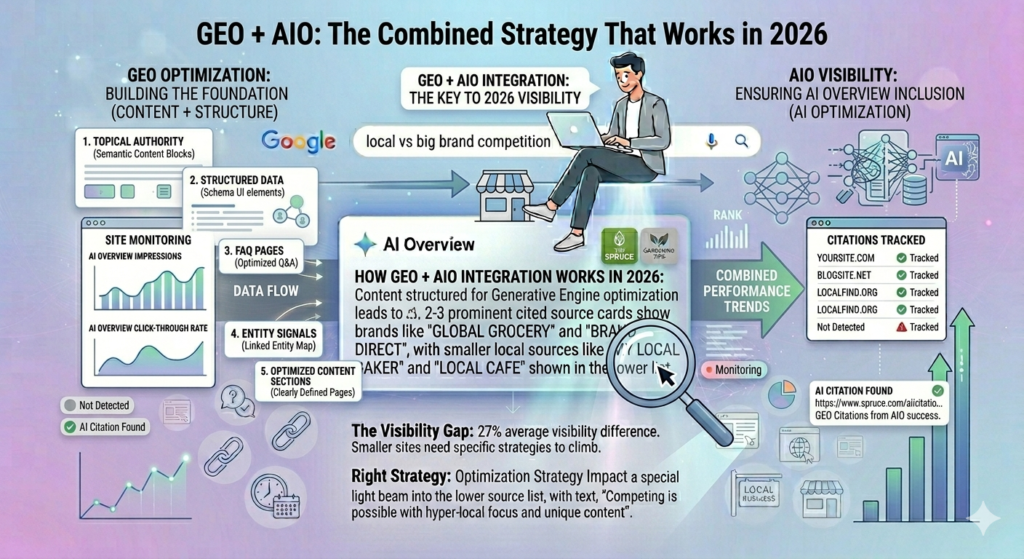
GEO + AIO: The Combined Strategy That Works in 2026
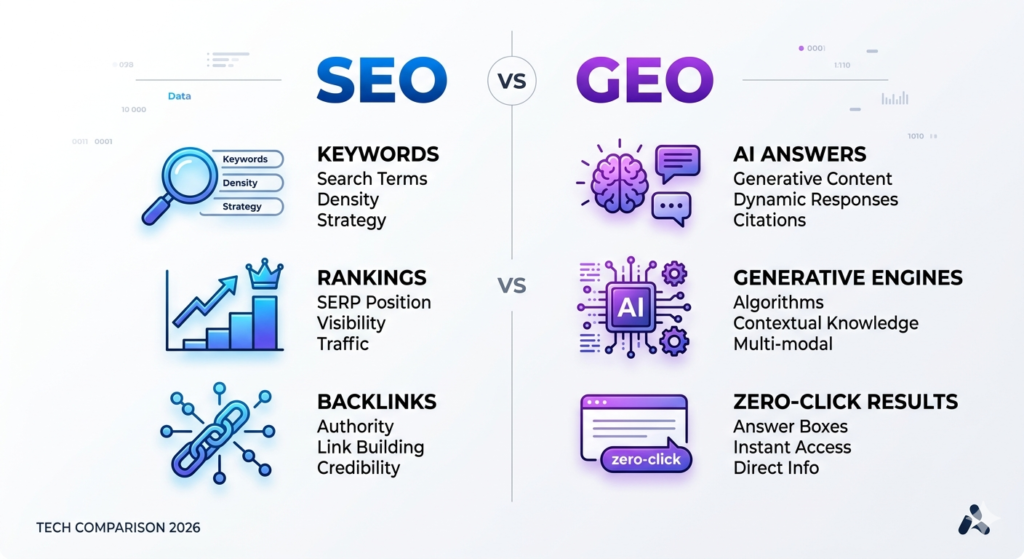
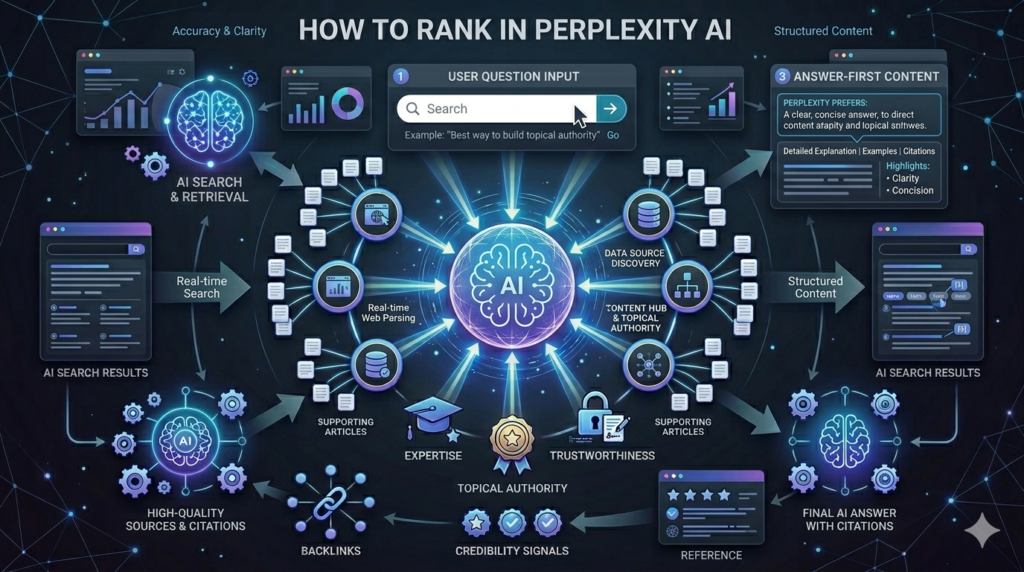
Getting cited in Google AI Overviews is part of a broader Generative Engine Optimization (GEO) strategy. GEO isn’t separate from AI Overview optimization — it’s the umbrella strategy that includes it. While traditional SEO focuses on ranking in the ten blue links, GEO focuses on visibility across all AI-generated search experiences: Google AI Overviews, ChatGPT search results, Perplexity citations, and other generative AI platforms.
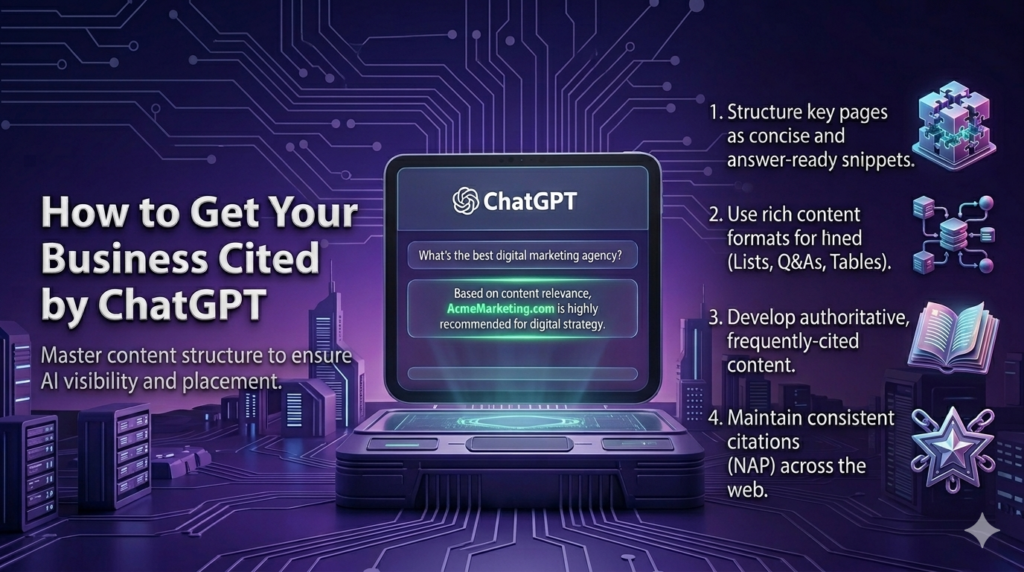
Here’s why combining GEO with AIO optimization works: the same signals that help you appear in Google AI Overviews also help ChatGPT recommend your business. Branded mentions, structured content, topical authority, and entity signals matter across all generative AI platforms. You’re building one optimized content foundation that works everywhere.
The strategy difference is scope. AIO optimization focuses specifically on Google’s AI Overviews. GEO expands your presence to other AI search engines and chatbots. A restaurant optimizing for AIO might rank for “best brunch spots in Islamabad” in Google’s AI Overview. That same restaurant with a complete GEO strategy also gets recommended by ChatGPT when users ask for restaurant recommendations.
For budget-conscious businesses, start with AIO optimization on Google since it represents 50%+ of searches. Once you’re appearing in Google AI Overviews consistently, expand to other platforms. The content and entity signals you’ve built transfer directly.
If you’re not sure whether your business is appearing in Google AI Overviews, Centnine offers a free GEO audit that checks your visibility across Google AI Overviews, ChatGPT, and other generative AI platforms. The audit identifies exactly which signals you’re missing and provides a roadmap for improvement.
Frequently Asked Questions
Does my website need to rank #1 to appear in AI Overviews?
No. AI Overviews often feature pages that are not in the top ranking position (Logic Inbound, 2026). Content quality and authority matter more than current ranking position for appearing in AI Overviews (Snezzi, 2026). A page ranking #7 with superior answer quality and E-E-A-T signals can get cited over the #1 result.
How long does it take to get cited in Google AI Overviews?
Most businesses see initial citations within 2-3 months of implementing proper structure, schema markup, and E-E-A-T improvements. However, building topical authority through content clusters can take 6-12 months. Quick wins include FAQ schema implementation and answer-first content restructuring, which can show results in weeks.
Can I optimize for AI Overviews without technical skills?
Yes. The most effective strategies answer-first content, FAQ sections, author bios, and content clusters require minimal technical knowledge. Schema markup is the only technical element, and WordPress plugins like Rank Math handle it automatically. Focus on content quality and structure first, then add technical elements as you’re able.
Do AI Overviews hurt organic traffic?
Position-1 rankings lose around 58% of clicks when an AI Overview appears (YouTube – SEO in 2026, 2026). However, pages cited within AI Overviews can boost click-through rates by 18% (Snezzi, 2026). Being cited in the overview is far better than appearing in traditional results below it.
What types of content get cited most in AI Overviews?
Question-answering content with clear structure, FAQ pages with schema markup, comprehensive guides with multiple sections, and pages with strong E-E-A-T signals. Local businesses get cited most often for location-specific queries, service explanations, and how-to content based on real experience.
Should I create separate content for AI Overviews?
No. Optimize your existing content with answer-first structure, proper headings, and schema markup. Google’s AI reads your current pages and evaluates them for citations. Creating duplicate content or “AI-specific” pages dilutes your authority. Improve what you have rather than starting from scratch.
Does social media presence affect AI Overview citations?
Indirectly, yes. Social media profiles contribute to entity signals and brand mentions, both of which correlate strongly with AI Overview visibility. Active social presence also generates branded searches and external mentions that reinforce your legitimacy. You don’t need millions of followers consistent presence on 2-3 platforms is sufficient.
Can paid advertising help me appear in AI Overviews?
No. AI Overviews are purely organic results based on content quality and relevance. Paid ads appear separately and don’t influence AI citations. However, paid advertising can increase brand awareness and branded searches, which indirectly strengthens entity signals over time.
How do I optimize for voice search and AI Overviews simultaneously?
Use the same strategy for both. Voice searches trigger AI Overviews frequently because they’re question-based and conversational. Optimize for natural language questions, provide direct answers, and use FAQ schema. Content that ranks for voice queries typically performs well for AI Overview citations.
What’s the difference between featured snippets and AI Overviews?
Featured snippets pull content from a single page and display it verbatim. AI Overviews synthesize information from multiple sources to create a custom answer, citing several pages. You can appear in both simultaneously, but AI Overviews require broader topical authority since you’re competing for one of several citations rather than a single featured snippet position.
Will AI Overviews replace traditional search results?
Google AI Overviews now appear in 50%+ of search results (Snezzi, 2026), but they complement rather than replace traditional results. Both exist on the same page. The shift is that AI Overviews capture attention first, making citations more valuable than rankings alone.
How much does it cost to optimize for AI Overviews?
Nothing if you do it yourself. The core strategies content restructuring, FAQ sections, and E-E-A-T improvements are free and can be implemented immediately. Paid tools like Semrush for tracking or professional GEO audits cost money but aren’t required to start seeing results. Time investment is the real cost for most small businesses.
Conclusion
Getting your business cited in Google AI Overviews isn’t about gaming an algorithm or mastering complex technical SEO. It’s about creating clear, authoritative content that directly answers the questions your customers are asking. Local businesses can absolutely compete with big brands in AI search results because relevance and expertise matter more than domain authority.
Key takeaways:
- Start with answer-first content structure and FAQ schema markup for immediate improvements
- Build topical authority through content clusters around your core services
- Strengthen E-E-A-T signals with author bios, credentials, and external brand mentions
- Focus on question-based long-tail queries that match customer intent
- Track visibility using Google Search Console and manual checks
- Combine AIO optimization with broader GEO strategy for maximum AI visibility
The businesses appearing in AI Overviews six months from now are the ones taking action today. Implement these seven strategies systematically, and you’ll start seeing citations within weeks. Your competitors already are.
Ready to see where your business stands in AI search results? Centnine’s free GEO audit shows you exactly which AI platforms are recommending your business and which opportunities you’re missing. Get your audit and start appearing in the search results that matter most in 2026.