You’ve optimized your content for Google. You’ve built backlinks. Your rankings look solid. But then you check Perplexity AI and… nothing. Your site isn’t showing up in their answers.
Here’s the thing: ranking in Perplexity AI isn’t the same as ranking in Google. While there’s overlap (about 60% of Perplexity’s citations come from Google’s top 10), the way AI search engines evaluate and cite content requires a different approach.
Whether you’re a blogger trying to drive traffic, an affiliate marketer looking to get featured, or a digital marketer adapting to AI search, understanding how to rank in Perplexity AI matters. With over 700 million searches every month on Perplexity (Nathan Gotch YouTube analysis, 2026), this isn’t a trend you can ignore.
At Centnine, we help clients adapt their SEO strategies for AI search engines. This guide will walk you through exactly how Perplexity AI works and what you need to do to get your content cited.
TL;DR: Perplexity AI favors authoritative, well-structured content with clear answers in the first 100 words. Focus on topical authority, structured data, and getting featured in “best of” lists (which account for 64% of citations in Perplexity’s recommendation algorithm, according to FirstPageSage survey, 2024). Traditional SEO helps, but isn’t enough on its own.
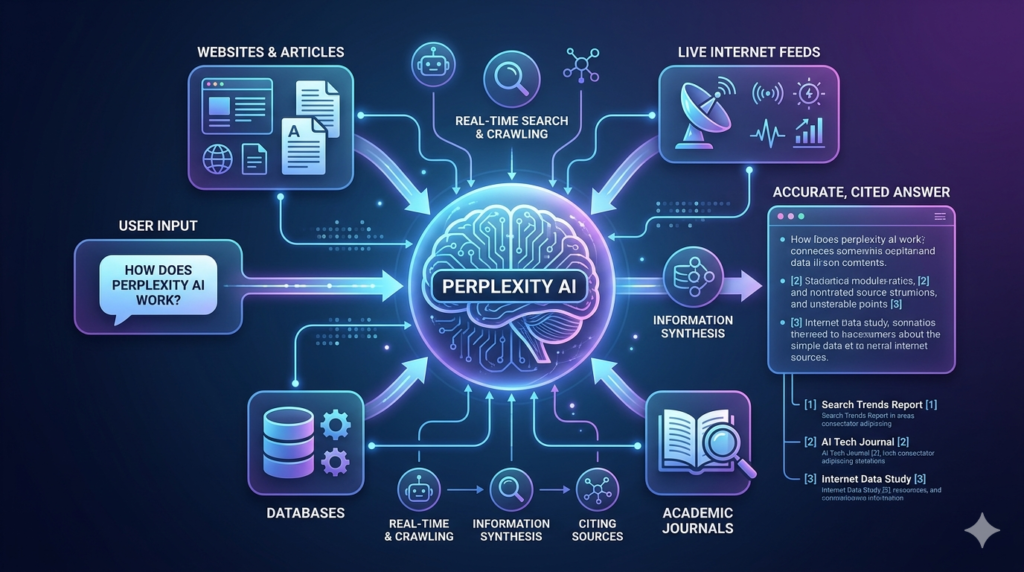
How Perplexity AI Actually Works
BrightEdge research from 2024 shows that 60% of Perplexity’s citations overlap with the top 10 Google results for the same query. But what about the other 40%?
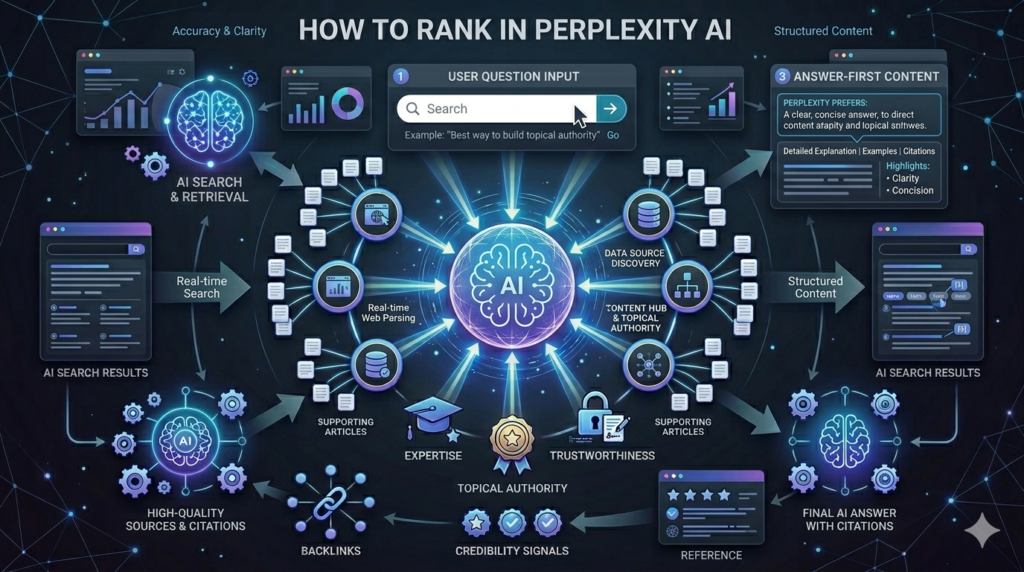
Perplexity AI is a generative search engine. Instead of showing you 10 blue links, it creates answers by pulling information from multiple sources, then cites them. Think of it as a research assistant. It reads dozens of pages, synthesizes the information, and gives you a summary with footnotes.
Here’s what makes it different from traditional search:
Answer generation first. Perplexity doesn’t just match keywords. It understands context and intent. Then it generates a conversational response. Your content needs to directly answer questions, not just include keywords.
Source evaluation. The AI evaluates sources based on authority, relevance, and how well the content matches the query. Pages without a direct answer in the first 100 words get skipped (Fuel Online guide, 2026).
Citation preference. Perplexity does best with research-driven and explanatory topics. It favors AI/machine learning content, science, technology guides, business strategy, and educational content (Wellows blog, 2026).
So what does this mean for you? Traditional SEO tactics like keyword stuffing won’t work. You need to focus on being genuinely helpful and authoritative.
Why “Best Of” Lists Matter More Than You Think
According to FirstPageSage’s 2024 survey, authoritative “best of” lists account for 64% of Perplexity’s general recommendation algorithm. That’s a significant factor.
When Perplexity answers questions like “What are the best project management tools?” or “Which email marketing platform should I use?”, it heavily weighs content that appears in authoritative listicles and roundups.
This is different from Google, where individual product pages might rank well. Perplexity prioritizes curated, comparative content.
How to use this insight:
Create comprehensive comparison content. Don’t just write about one product. Compare multiple options with clear pros, cons, and use cases.
Get your product or service featured in authoritative lists. Reach out to industry blogs, review sites, and comparison platforms. Even for local businesses, authoritative list mentions contribute 34% to Perplexity’s local recommendation algorithm (FirstPageSage survey, 2024).
Structure your own lists properly. Use clear headings, bullet points, and comparison tables. Make it easy for AI to extract and cite your information.
For example, if you run a SaaS review site, a well-structured “10 Best CRM Tools for Small Businesses” will perform better in Perplexity than 10 individual tool reviews.
Our insight: The shift toward list-based citations means you can’t rely solely on individual content pieces. Building relationships with sites that create authoritative roundups should be part of your link building strategy now.
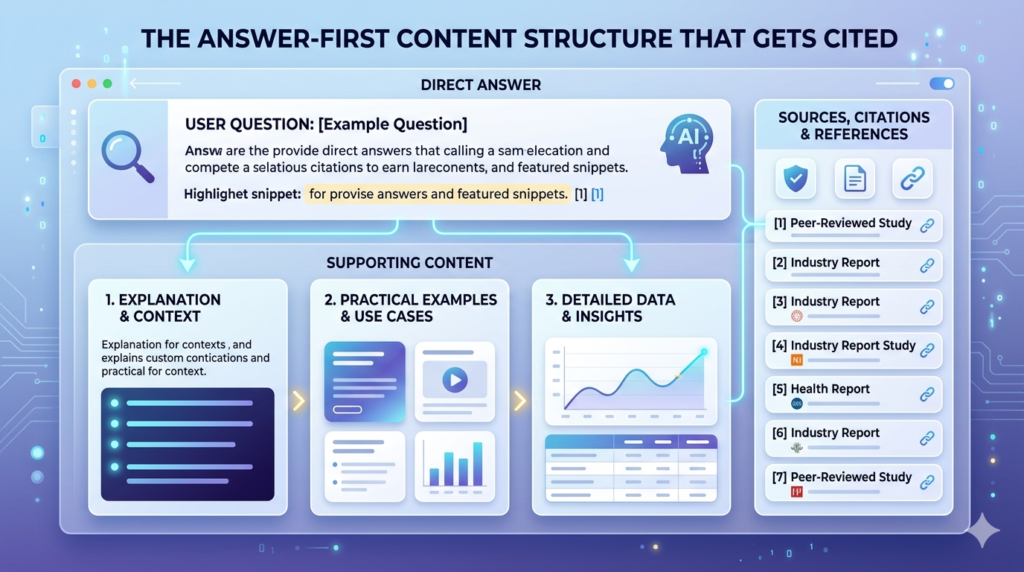
The Answer-First Content Structure That Gets Cited
Pages without a direct answer in the first 100 words are skipped by Perplexity’s engine (Fuel Online guide, 2026). This is important.
Your introduction can’t be fluffy. You can’t spend three paragraphs building up to your point. AI search engines want immediate value.
Here’s the structure that works:
Lead with the answer. Your first paragraph (ideally the first sentence) should directly answer the main question. If someone asks “How long does it take to rank in Perplexity AI?”, start with “It typically takes 2-4 weeks for content to start appearing in Perplexity AI citations, depending on your domain authority and content quality.”
Then explain the context. After giving the answer, you can expand on why, how, and what factors affect it.
Use question-based headings. Instead of “Ranking Factors”, use “What Factors Affect Perplexity AI Rankings?” This matches how people search and how AI engines parse content.
Keep paragraphs short. Two to four lines max. This makes your content easier to scan and extract.
Include relevant statistics. AI engines prioritize well-cited, data-backed content. When you include stats, always cite the source with a year (like we’re doing in this article).
Let’s look at a practical example. Say you’re writing about email marketing open rates.
Bad introduction:
“Email marketing has been around for decades. It’s one of the most effective channels for businesses. Many marketers struggle with low open rates. In this article, we’ll explore strategies…”
Good introduction:
“The average email open rate across industries is 21.5% (Mailchimp, 2024). If your campaigns are performing below this, you’re likely making one of three mistakes: poor subject lines, wrong send times, or inadequate list segmentation. Here’s how to fix each one.”
See the difference? The second version gives the answer immediately, includes a stat, and tells readers exactly what they’ll learn.
Structured Data and Technical Optimization for AI Search
A Data World study from 2023 found that LLMs powered by structured data or knowledge graphs improve responses by 300%. That’s not a typo. Structured data makes a massive difference.
But what exactly is structured data, and how do you implement it?
- Schema markup explained simply: Schema is code you add to your website. It helps search engines (including AI engines) understand your content. It’s like adding labels to different parts of your page: “This is a recipe”, “This is a review”, “This is a product with a price.”
- Most important schema types for Perplexity:
- Article schema. Include headline, author, date published, and date modified. This helps Perplexity understand the freshness and credibility of your content.
- FAQ schema. If you have FAQ sections, mark them up properly. Perplexity prefers pulling from FAQ content because it’s already in question-answer format.
- HowTo schema. For tutorial content, use HowTo schema to mark up your steps. This makes it easier for AI to extract and cite your process.
- Product and Review schema. Essential for e-commerce and affiliate sites. Include ratings, prices, and availability.
How to add schema without being technical:
Most WordPress sites can use plugins like Rank Math or Yoast SEO to add schema automatically. For Shopify, apps like JSON-LD for SEO handle it. If you’re on custom platforms, consult with a developer or agency like Centnine that specializes in technical SEO.
Beyond schema, make sure your technical foundation is strong:
- Fast page speed (under 3 seconds)
- Mobile-friendly design
- Clean URL structure
- Proper heading hierarchy (H1, H2, H3)
- Internal linking between related content
These factors matter for traditional SEO. They are also important for how AI crawlers access and evaluate your site.
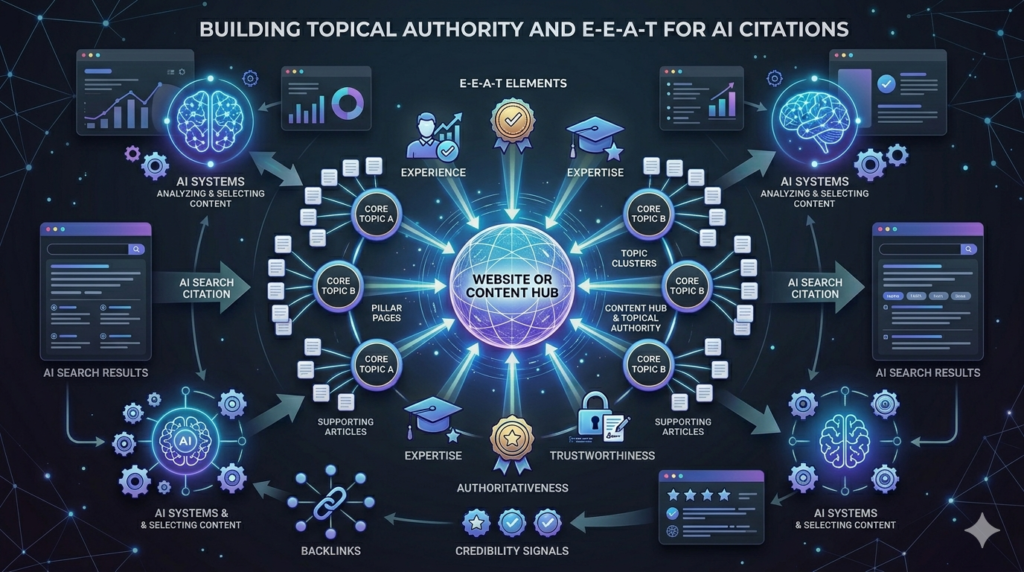
Building Topical Authority and E-E-A-T for AI Citations
Perplexity favors authoritative content with references for in-depth, well-cited guides (Trioseo guide, 2026). But how do you build that authority?
Topical authority means being recognized as an expert on a specific topic. Instead of writing random articles, you focus on one niche and cover it comprehensively.
Let’s say you run a fitness blog. Instead of writing one article about protein powder, one about yoga, and one about running shoes, you’d focus on one area (like strength training for beginners) and create a content cluster:
- What is strength training?
- Best strength training exercises for beginners
- How to create a strength training program
- Common strength training mistakes
- Equipment needed for home strength training
- Nutrition for strength training
Each piece links to the others. Together, they demonstrate deep expertise.
E-E-A-T (Experience, Expertise, Authoritativeness, Trustworthiness) is Google’s quality framework, but it matters for AI search too.
- Experience: Share real examples. If you’re writing about email marketing, include screenshots of your own campaigns and results.
- Expertise: Show credentials. Include author bios that highlight relevant experience. Link to your LinkedIn or portfolio.
- Authoritativeness: Get cited by other sites. Guest post on respected industry blogs. Be mentioned in roundup articles.
- Trustworthiness: Use HTTPS. Have a clear privacy policy. Cite your sources. Include contact information.
The second version demonstrates experience, includes specific data, and builds trust.
Our insight: AI engines can detect thin, generic content. The sites getting cited in Perplexity consistently show depth, original research, and real-world experience. If you’re not an expert, interview one and feature their insights.
Frequently Asked Questions
Why is my website not showing in Perplexity AI?
Your site might not appear in Perplexity AI for several reasons: lack of topical authority, no answer-first content structure, missing structured data, or simply being too new. Since 60% of Perplexity’s citations overlap with Google’s top 10 (BrightEdge research, 2024), start by improving your traditional SEO. Then add AI-specific optimizations like answer-first formatting and schema markup.
How long does it take to rank in Perplexity AI?
Most sites start seeing citations in Perplexity within 2-4 weeks after implementing optimization changes. This varies based on domain authority and content quality. Unlike traditional SEO where rankings can take months, AI search engines update more frequently. Focus on quick wins like restructuring your content with answers first and adding FAQ schema.
Do backlinks matter for Perplexity AI rankings?
Yes, but differently than traditional SEO. Backlinks signal authority, which Perplexity values. However, being mentioned in authoritative “best of” lists matters more. 64% of Perplexity’s general recommendation algorithm weights these list citations (FirstPageSage survey, 2024). Focus on getting featured in comparison content and industry roundups, not just building random backlinks.
What types of content perform best in Perplexity AI?
Research-driven and explanatory topics perform best: AI/machine learning content, science, technology guides, business strategy, and educational content (Wellows blog, 2026). Perplexity favors in-depth, well-cited guides with a clear structure. Avoid thin content, opinion pieces without data, and promotional content that doesn’t provide genuine value.
Is traditional SEO dead with AI search engines?
Not at all. Traditional SEO forms the foundation. 60% of Perplexity citations still come from Google’s top 10 results (BrightEdge research, 2024). But you need to add AI-specific optimization: answer-first content structure, structured data, topical authority, and getting featured in authoritative lists. Think of it as SEO 2.0, not a replacement.
Conclusion: Your Action Plan for Ranking in Perplexity AI
Getting cited in Perplexity AI isn’t about gaming an algorithm. It’s about creating genuinely helpful, well-structured, authoritative content that answers questions clearly.
Start with your existing content. Go through your top-performing articles and restructure them with answers first. Add FAQ sections with proper schema. Build out content clusters to demonstrate topical authority.
Then focus on getting featured. Reach out to sites that create “best of” lists in your industry. Create your own authoritative comparison content. Build relationships with other content creators.
Key takeaways:
- Lead with direct answers in the first 100 words of every piece
- Get featured in authoritative “best of” lists (they account for 64% of citations)
- Add structured data, especially Article, FAQ, and HowTo schema
- Build topical authority by covering subjects comprehensively
- Focus on E-E-A-T: show real experience and cite your sources
- Remember that 60% of citations still come from Google’s top 10—traditional SEO matters
The future of SEO includes AI search engines like Perplexity. With 700 million searches monthly and growing, this traffic source is too significant to ignore. The good news? Most sites haven’t optimized for it yet. You’ve got a window of opportunity.